
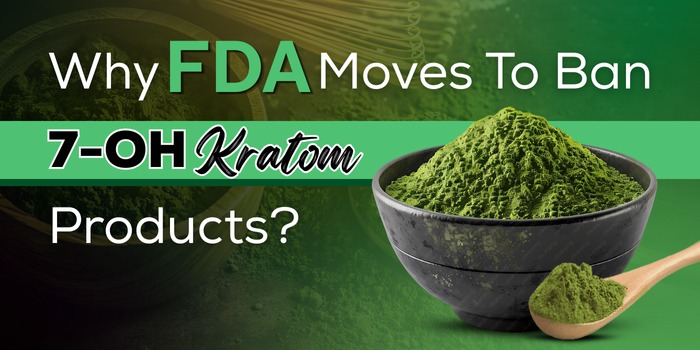
In late July 2025, the USA Food and Drug Administration (FDA) took a decisive step against 7-hydroxymitragynine (7-OH), they are moving to ban 7-OH kratom products. Unlike the natural kratom leaf, which many consumers use for relaxation, energy, or focus, 7-OH is increasingly sold in high-potency extracts, gummies, and drinks that carry far greater risks of addiction, overdose, and misuse.
By moving to classify 7-OH as a Schedule I controlled substance, the FDA signaled its intent to curb the spread of unregulated, lab-altered kratom derivatives while leaving the debate over the plant itself unresolved.
Why Are 7-OH Kratom Products Not the Same as Traditional Kratom?
Kratom comes from the leaves of the Mitragyna speciosa tree, used traditionally in Southeast Asia for energy, focus, and relaxation. The natural leaf contains many alkaloids, but its primary active compound is mitragynine. By contrast, 7-hydroxymitragynine (7-OH) is another alkaloid that is present in tiny, almost trace amounts in the leaf itself.
The problem arises with modern, commercial products. Manufacturers often concentrate or even synthetically enhance the 7-OH content, creating extracts, shots, gummies, and powders that are far more potent than natural kratom tea or leaf powder. This makes them behave less like a traditional herbal supplement and more like a powerful opioid-like drug.
Natural Kratom leaves Vs. 7-OH Kratom Products
| Feature | Natural Kratom Leaf | 7-OH Kratom Products |
| Alkaloid Content | Mostly mitragynine; tiny natural trace of 7-OH | Chemically altered or concentrated to contain much higher levels of 7-OH |
| Potency | Mild stimulant in small doses; relaxing at higher doses | Strong opioid-like effects, far more potent |
| Safety | Traditional use in Southeast Asia; relatively moderate risk when consumed as tea/leaf | Higher risk of addiction, overdose, and withdrawal due to opioid receptor activity |
| Market Form | Dried leaves, powders, teas, capsules | Extract shots, gummies, resins, “ultra” powders, vape-style liquids |
The Health Concerns Regarding 7-OH Kratom Products
Studies show that 7-OH binds far more strongly to opioid receptors than mitragynine, the main compound in kratom leaves. This creates a higher risk of dependence, difficult withdrawals, and drug-seeking behavior similar to prescription opioids.
Many 7-OH items sold in gas stations, vape shops, and online carry unknown alkaloid concentrations. Some are even mislabeled as “natural kratom” when, in fact, they contain synthetic or semi-synthetic 7-OH — making it impossible for consumers to know what they’re actually ingesting.
Poison control centers have reported a steady increase in emergency calls linked to kratom extracts, with several fatal overdoses where 7-OH was a contributing factor. The lack of regulation means products vary wildly in strength, putting users at unpredictable risk.
Brightly packaged fruit-flavored gummies, shots, and even ice cream cones containing 7-OH are being marketed like energy drinks or candy, raising alarms about teenage exposure. Regulators fear these products could draw younger audiences into opioid-like use patterns.
What Steps Is the FDA Taking to Ban 7-OH Kratom Products?
On July 29, 2025, the FDA announced new steps to ban 7-OH kratom products, calling them dangerous. The agency stressed that the action targets concentrated 7-OH extracts, not the natural kratom leaf. Here’s what the FDA is doing:
Recommending Schedule I Classification
The FDA formally urged that 7-OH be placed under the Controlled Substances Act (CSA) as a Schedule I drug — the strictest category, reserved for substances with high abuse potential and no approved medical use.
Issuing Warning Letters
In June, the FDA sent letters to seven companies illegally selling 7-OH products such as tablets, gummies, drink mixes, and shots, warning them to stop distribution.
Educating the Public
The agency released a new report and educational materials explaining the risks of 7-OH, including its stronger opioid activity compared to kratom leaf alkaloids.
Alerting Health Professionals
The FDA sent letters to doctors, pharmacists, and other providers, urging them to know the dangers posed by concentrated 7-OH products.
Protecting Youth
Officials raised concern about fruit-flavored gummies, drinks, and even ice cream cones infused with 7-OH, which are often marketed in ways that appeal to children and teenagers.
FDA Commissioner Marty Makary, M.D. described 7-OH as “an opioid that can be more potent than morphine,” stressing that swift action is needed to avoid repeating mistakes from past opioid crises.
The States Are Also Taking Action against 7-OH Kratom Products
- In Louisiana, the decision was simple: they passed an outright ban in August 2025, treating 7-OH as too risky to remain on store shelves.
- Mississippi and Colorado took a different path, raising the purchase age to 21 and banning only synthetic or high-concentration 7-OH products.
- New York is moving toward tighter rules, too, focusing on stricter labeling, age limits, and cracking down on misleading “all-natural” marketing.
- And in a surprising twist, Rhode Island reversed its earlier ban, instead choosing to regulate kratom products under a structured framework.
Pushback From the Kratom Industry against the move to Ban 7-OH Kratom
The FDA’s plan has faced strong criticism from kratom makers and advocates. They argue the real danger lies in lab-made 7-OH extracts, not the natural kratom leaf.
Industry groups warn that banning too broadly could push the market underground, making products even less safe. They also point out that many people rely on kratom to manage pain, anxiety, or opioid withdrawal.
What the Experts Think about Ban 7-OH Kratom Products?
Scientists and health specialists don’t all agree on the FDA’s move.
Christopher McCurdy, a leading kratom researcher, believes natural kratom may help people taper off opioids. But he warns that 7-OH is more potent and more addictive, and should not be treated the same as the leaf.
Addiction experts say the answer isn’t banning everything. They call for clearer labels, product testing, and more research to guide safe use.
Final Thoughts – FDA Moves to Ban 7-OH Kratom
The FDA’s crackdown on 7-OH highlights the difference between natural kratom and lab-altered extracts. While traditional kratom may offer benefits, concentrated 7-OH carries real risks of addiction and misuse. The challenge is finding balance: protecting public health without taking away safe access to the natural plant.